Thursday, June 24, 2021

Women's rights and Marriage Issues in the Samburu Tribe

BACKGROUND

To begin this post, let me give you some background on the Samburu Tribe. This is a resident Indigenous

group that has been present in East Africa for several thousand years. They are a Nilotic tribe and thus

they share ground, territory and a few languages with other East African tribes such as the Maasai, but

have their own unique culture and way of life compared to these other peoples. The Samburu are a

pastoral people. This means that they are traditionally herders and practitioners of animal husbandry

over the more agriculture or hunter gatherer like peoples that existed in North America. Samburu people

usually herd cattle, goats and sheep, occasionally camels, and make a living off of their milk, meat and

other resources they find in their environment. They are defensive by nature and have never been a

warrior based society, though there have been recorded clashes with other tribes. An interesting point

about the Samburu people: They are one of the few Indigenous peoples in Africa, and the world,

that were affected very little compared to other Nations and groups by colonialism. The British

occupied East Africa in the past, along with other European powers such as the Netherlands,

Germany and others, but none of them targeted Samburu lands. The land they traditionally grazed

their animals on was arid for most of the year, and was unsuitable for settlers because of that.

Today, the Samburu retain a fair amount of their pre contact traditions and culture because of

that, including a unique social system, a gerontocracy. Gerontocracy is a societal system where the

oldest individuals hold the most power over the community, and Samburu elders control their own tribes.


“The power of elders is linked to the belief in their curse, underpinning their monopoly over arranging marriages and taking on further wives. This is at the expense of unmarried younger men, whose development up to the age of thirty is in a state of social suspension, prolonging their adolescent status.”

www.atlasofhumanity.com/samburu


(Samburu Elder and Women in ceremonial garb)

The Elders of the community are believed to be capable of bringing down Nkai’s (The creator spirit

for the Samburu) wrath in the form of a curse which can bring misfortune and bodily harm. Young

men from 15 - 30, called Morans (Warriors), are kept away from the Samburu tribes and devote

themselves entirely to defending the cattle and livestock of the tribe and expanding their grazing

ground, keeping them safe from predators, and defending against other pastoral tribes, alone or

more often in specially formed bachelor groups. Nowadays, Samburu people do still practice their

pastoral traditions, but also live in more developed areas, and partake in the safari tour industry, among

other modern jobs. Traditionally, Samburu women are considered caretakers, mothers and the main

body of the community, besides the Elders, who are respected above all others. Unfortunately,

women are mistreated often due to practices that are now considered problematic…


THE ISSUE AT HAND

In Samburu culture, when a woman comes of age, or is close to marriage (two things which can be

disturbingly close, more on that later) , she is circumcised. This is already a debated topic. Many

groups frown upon the practice and it is often called female genital mutilation . For the Samburu

people, who often lack modern medicines, antiseptics and treatments, it can result in infection and

health hazards. This is a practice that is seen very rarely in Indigenous communities, and one that has

attracted a lot of negative attention from local governments and the international community. On top of

this, girls of this tribe can and are married off at very, very early ages, with some marriages occurring

between older men, and girls no older than 10. This has also not been very popular, especially when

the knowledge is made more widely available. Rigid tradition places them in the role of caretakers and

mother before all else. And when younger girls are ready for marriage, the ceremony is more for political,

material and monetary gain, as trading away a girl in marriage can secure all of the above for her family.

Cattle and other resources that are precious commodities in this community are some of the driving

factors behind this child marriage issue. Not to say this isn’t a new issue either, it is the tradition of the

Samburu, and that’s one of the hardest things to swallow. Another note is the pandemic of Covid 19

that has recently swept up the world in turmoil, and the Samburu people, and this issue in particular

has heightened because of it. Girls who no longer go to school are often forced back into households

unfit to accommodate them. The lack of income from safari tourism and increasing pressure from climate

change pushes many of these Samburu families to give away their daughters for food and resources.


(Traditional Samburu tribeswomen collecting water)


“Sometimes we go hungry and can’t find clothes to put on. (Her mother) Started marrying us off, so that she can find money to bring up her other children.”

A quote from a 15 year old Samburu girl interviewed by Stephanie Sinclair and Jeremiah

Kipainoi, new york times journalists

Women in these communities are viewed more often as a resource. Those that have access to schooling

are rare, and they often have reduced access to education, financial resources and employment.

Child marriage is common around the world, sadly, and an estimated 12 million girls are subjected to

child marriage every year, usually arranged. In fact, it is estimated that worldwide there are more than

650 million women who were married off as children. Usually due to culture and circumstance, in the

case of the Samburu. The Government of Kenya, the country where almost all of the Samburu live,

but more specifically, President Uhuru Kenyatte has put out pledges to eradicate child marriage and

FGM (Femae Genital Mutilation) by Q1 2022, but many doubt this may be entirely possible in that

amount of time. Now, this is obviously not Ideal, in a perfect world no child marriage shoud be occuring,

because of Covid, is this process and the push against it erasure of that indigenous groups

culture? Probably not, but it raises some interesting questions.
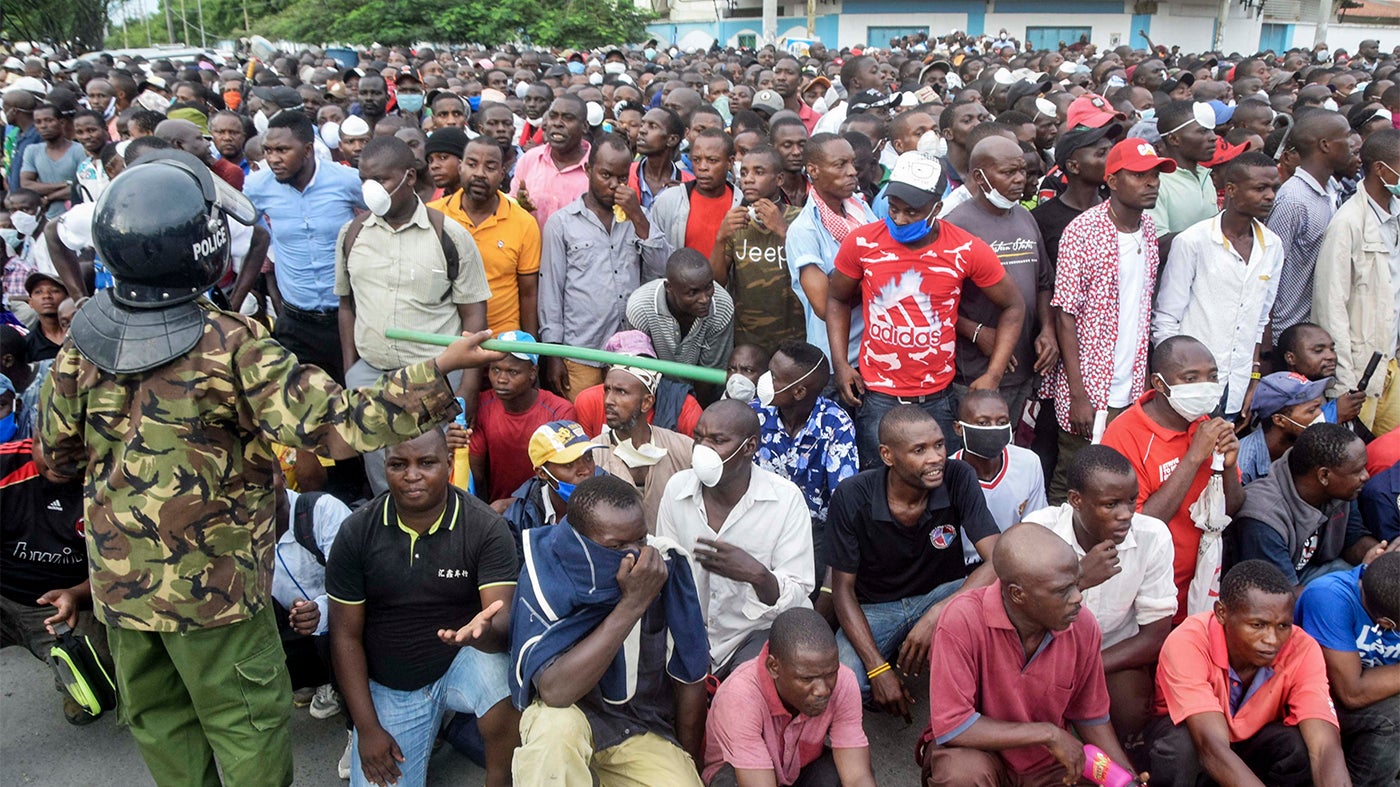

(A police conflict in a Kenyan slum. Conflict is on the rise in Kenya due to Covid-19 restrictions)

QUESTIONS AND REFLECTIONS

The Objectives of marriage in the Samburu people is to ensure a bloodline, to carry on a family, and to

ensure a good relationship with other families through the trade of goods and a young bride. The

unintended result, unfortunately, is that in times of desperation, such as during the Pandemic, women

are married off at earlier and earlier ages as their families depend on the resources given by their

better off neighbour's from these marriages, an idea turned sour by poor situations. In a traditional sense,

these marriages are celebrated events that tie the community together. The political significance in

this situation is mostly the relation of the Samburu tribe and the groups outside it, and across the wider

world. These child marriages pin the government against the people, and in the end that leads to more

impoverished conditions. And it's spurred a lot of negativity after it was widely revealed to be an Issue.

But in this situation, is disregarding the practice entirely right? Or is there a better option out there that

preserves the culture? When women and girls undergo this process and are married off, is it only just

the poor conditions to blame? The whole situation can be connected to Canada through a marginalized

bias against indigenous women in Canadian history, and most recently the increasing trend of missing

and murdered indigenous women and girls. Poor conditions, but also an underlying bias link this issue

between the two groups, in a threat towards the Indigenous women and girls of the community. 

Thankfully, nonprofit organizations like the Pastoralist Child Foundation, led by Siraria Leadismo, and

the Government of Kenya have made several attacks against child marriage in this setting, through

fundraising initiatives, onsite support and seminars, and classes for government officials, community

leaders and children. In a situation like this, knowledge and information is power.


(A member of the PCF gives a seminar in a North Kenyan classroom)


Bibliography/References

Atlasofhumanity.com. “Kenya, Samburu Tribe.” Atlas Of Humanity, www.atlasofhumanity.com/samburu. 

“'These Girls Are Being Cut and Married in Droves'.” The Story INSTITUTE, www.thestoryinstitute.com/samburu. 

“A Warrior for Girls' Rights. Interview with Samuel Siriria Leadismo.” Safe World for Women, www.asafeworldforwomen.org/kenya/pcf/pcf-news/4985-warrior-for-girls-rights.html. 

Sinclair, Stephanie, and Jeremiah Kipainoi. “'These Girls Are Being Cut and Married in Droves'.”

The New York Times, The New York Times, 10 Dec. 2020, www.nytimes.com/2020/12/10/opinion/kenya-covid-

child-marriage.html. 


Wednesday, June 23, 2021

Indigenous women have been forced into sterilization in America


Cherokee Tribal Government.
https://cherokeehazel.wordpress.com/traditional-cherokee-government/ 
By Dora 

The Cherokee Nation is one of the largest tribes in the United States, with more than 390,000 tribal citizens worldwide. Although the legal obligation of America is to provide good healthcare for Indian people like Cherokee, many reports published have mentioned that in comparison to other U.S. populations, Native American communities confront severe disparity in health care and health status. And one of the concerns is the concern over severity of forced sterilization had led some Native Americans to consider them genocidal. 

Unlike other groups, Native Americans are entitled to health care from the federal government, but the system is poorly run and funded. According to The Economist, Native Americans' life expectancy is 4.4 years below the American average and at the highest rates of pre-existing health conditions out of any ethnic or racial group in America. American Indian and Native women have greater rates of teenage pregnancy, late or no prenatal care, and alcohol and tobacco use during pregnancy as compared to other demographics. Preterm birth, mortality, and sudden infant death syndrome are all more common among their babies than in the general population.


At that time, in the political perspective of the government, they declared a new policy to assimilate and decrease the Indigenous populations because of the Native American genocide. As early as 1907, Congress passed the Family Planning Services and Population Research Act, which subsidized sterilizations for Medicaid and IHS patients- without including measures to safeguard against abuse. Therefore, Indian Hospitals were allowed "to sterilize unwilling and unwitting people." The sterilization of Native American women seriously affected their descendants and their tribes for generations. This government-forced sterilization is additionally the reason why countless miserable women have suffered from the sterilization abuse perpetrated. 

Cherokee Indian dress style during the Trail of Tears. This photo is a blend of a “Tear Dress” and “Ribbon Shirt” worn by both men and women. 
https://cherokeehazel.wordpress.com/customsbeliefs/ 

How did sterilization abuse perpetrate shocking news spread out in the Cherokee community? 

In November 1972, a 26-year-old Native woman visited the office of Dr.Connie Pinkerton-Uri in Cherokee, Choctaw, and asked for a "womb transplant" because she and her husband wanted to start a family. Shocked by request, Doctor Uri said that she knew women at the age of twenty do not undergo complete hysterectomies unless diagnosed with cancer, have uncontrolled bleeding, or as an elective procedure. Pinkerton-Uri discovered that six years prior to the visit, the Native woman was given a full hysterectomy by an Indian Health Service (IHS) doctor because she had a drinking problem. The IHS physician had lied to the woman by telling her the procedure could be reversed when she wanted to have children. Pinkerton-Uri had to inform the young woman that a complete hysterectomy could not be reversed. Doctor Uri states that it is difficult to find statistical figures on the rate of sterilization because many Native Americans depend on staying hidden for survival, but claims through her studies that twenty-five percent of Native American women are sterilized. It took her one week to find twenty-six women who were sterilized. She found this to be alarming because, at the time, there were only 23,000 people in Cherokee total. Later, Pinkerton-Uri opened thousands of similar cases of complete hysterectomies. She also found out that Indian Health Service (IHS) had "singled out full-blooded Indian women for sterilization procedures." She said at least 3406 American Indian women were sterilized without their permission during the 1970s. Following pressure from Doctor Uri, Cherokee activists found the report's numbers too low, claiming that investigators failed to identify the extent of coercion underlying these surgeries. Native American women, like Cherokee women, were one of the most targeted populations for forced sterilizations in the twentieth century, especially in the state of North Carolina. North Carolina was among one of the first states to enact a voluntary sterilization law in 1960 and one of the most active state sterilization programs. Native women reported fearing the relocation of their children if they refused to cooperate with tubal ligation, among other concerns.

Forced and coerced sterilization has affected Indigenous populations; it is hard for them to change the future. How does the Cherokee Nation continuously grow today?

Cherokee Jimmie Durham and many other Indian leaders fought battles on multiple fronts to resist suspected federal efforts to diminish the Indian population. Their most significant achievement came in 1977 when Jimmie Durham achieved NGO status for IITC. Their goal was to gain international attention and status for Native nations. They were the first Indigenous entity in the world to acquire such status. Nowadays, the Eastern Cherokee community runs an expanding experiment in decentralization. Specifically, profits from the tribe's casino have helped the 12000 members of the Eastern Band of Cherokee Indian's opt out of the troubled U.S. government-run Indian Health service. Because twenty percent of federally recognized tribes in Oklahoma, California, and Arizona have been approved to take complete management of their healthcare, this experiment has a reasonable chance of succeeding. For the North Carolina Cherokee, self-governance will deliver care that not only improves patients' health but also is tailor-made for the tribes' needs. An Indigenous woman who has a mental collapse after the forced sterilization said the hospital is a medical home for Indigenous people. 

Aboriginal people in Australia also had a long history of sterilized women. In 2003, a Pine Creek man required a full investigation to claim. Aboriginal women in Arnhem Land were being sterilized without their consent. The tribe that lives in Arnhem Land is the Yolngu people, who have occupied the region for at least 60,000 years. Lance Lawrence said a sterilized woman had contacted him to let him know that Indigenous women were still being sterilized without understanding the procedure. "She's still in communication with her community, and I guess because of the numbers of people she knows that it's been done to, and their lack of understanding of the procedure, and their lack of English and so on, their concern is that they had no way of bringing this to anybody's attention and getting something done about it," he said. 

In Canada, the International Justice Resource Center (IJRC) says that forced sterilization is currently classified as a sexual battery in the civil domain and sexual assault in the criminal arena. Although the full scale of the problem is unknown because there has been no comprehensive investigation and a lack of publicly available data, many Indigenous women were still subjected to forced sterilization in public hospitals in 2019. Brenda Pelletier has received an apology from the Saskatoon Health Region after she went public with her story about being persuaded to submit to tubal ligation surgery. The International Justice Resource Center (IJRC) has aided Indigenous rights lawyers in their investigations into Indigenous women's forced sterilization in Canada and in obtaining reparation for victims. As a result of their duty to manage the public healthcare system, the Canadian government recognized their role in forced sterilizations of Indigenous women and committed to releasing the material it has.

The United States, Australian, and Canadian governments forced sterilization on the Indigenous people. As a student studying Aboriginal Issues, what sort of thoughts and feelings come to mind when you read till the end of this blog? 

I think Indigenous people are vulnerable populations, so forcing them into government policies is unjust from the humanity and ethical point of view. The sterilization of Native women in the 1970s was horrible and deplorable, and its traumatic legacy will be everlasting. And much like the violence perpetrated against Native women, we will never forget this dark history of genocide. As a student, I know about the history of colonialism and why we have people who are vulnerable, living in poverty, in such dire circumstances, and to share my compassion with them.


Reference 

International Justice Resource Center. (2019, October 16). Forced Sterilization of Indigenous Women in Canada. International Justice Resource Center. https://ijrcenter.org/forced-sterilization-of-indigenous-women-in-canada/

Khandaker, T. (n.d.). This Woman Says a Hospital in Canada Pushed Her to Undergo Sterilization. VICE. https://www.vice.com/en/article/9kj3vp/this-woman-says-a-hospital-in-canada-pushed-her-to-undergo-sterilization.  

Cherokee. (2015, March 23). BELIEFS, CULTURE AND CUSTOMS. CHEROKEE. https://cherokeehazel.wordpress.com/customsbeliefs/.  

Virdi, J. (2020, January 2). The coerced sterilization of Indigenous women. New Internationalist. https://newint.org/features/2018/11/29/canadas-shame-coerced-sterilization-indigenous-women

Katja Ridderbusch, K. H. N. (2019, July 27). How the Eastern Cherokee tribe took control of its healthcare. Modern Healthcare. https://www.modernhealthcare.com/providers/how-eastern-cherokee-tribe-took-control-its-healthcare

The Economist. (n.d.). How do Native Americans get health care? The Economist. https://www.economist.com/the-economist-explains/2021/04/26/how-do-native-americans-get-health-care.  

Nation Voice. (n.d.). Government admits forced sterilization of Indian Women - Timeline - Native Voices. U.S. National Library of Medicine. https://www.nlm.nih.gov/nativevoices/timeline/543.html

Theobald, B. (2019, December 5). The Native American Women Who Fought Mass Sterilization. Time. https://time.com/5737080/native-american-sterilization-history/.


Tuesday, June 22, 2021

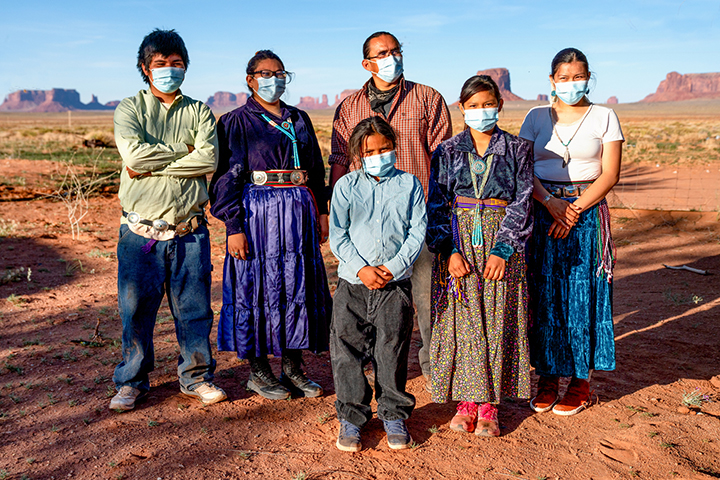
The Navajo Nation's Response to The Big Cough - Mia


The Navajo Nation's Response to The Big Cough

Mia


Throughout the past centuries, illnesses and pandemics have been recorded and documented, displaying detrimental losses to countries and communities, and being remembered for both the pain and death they cause, but also the medical advancements that can result from them. Today, we see this ringing just as true with the Covid-19 pandemic, and while it has caused many tragic losses across the globe, it has furthered research and advancements into amazing mRNA vaccines. However, when it comes to the pandemic, and many other medical instances, some groups of people are not given the same level of priority and are hit much harder by the effects of illness. Unfortunately, many of these groups are marginalized groups, like disabled people, people below the poverty line, third world countries, people of colour, and- focused on in this article- Indigenous people. 


Cast Aside- The Navajo Nation 

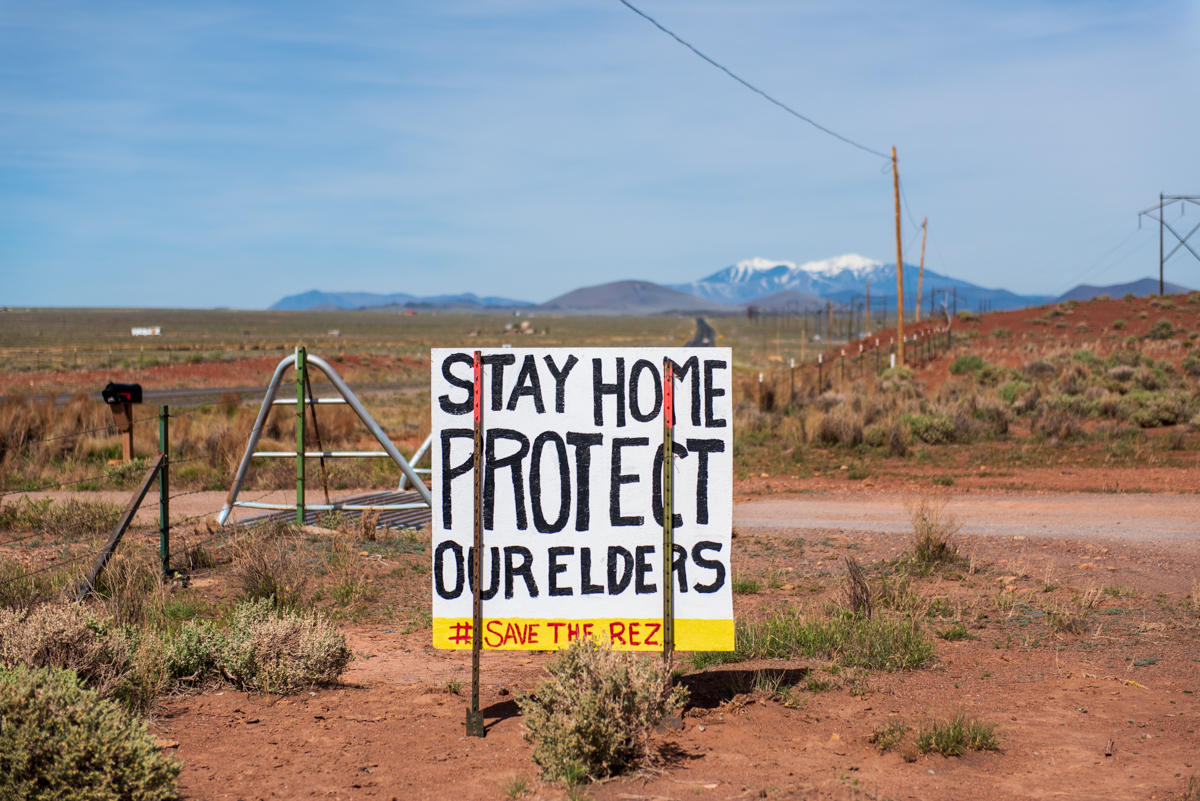
The Navajo Nation, which is home to over 175,000 Indigenous people and spreads over New Mexico, Arizona, and Utah, has been hit hard by the Covid-19 pandemic. As of June 11th, 30,914 positive cases have been confirmed within the Navajo Nation, and over 1,334 have passed due to Covid-19. While these numbers may seem minuscule to some in comparison to global numbers, Navajo Nation currently has an infection rate higher than New York’s- which used to be one of the most hot-spot states in the United States, as well as accounting for less than one-tenth of New Mexico’s population yet 55% of their recorded Covid-19 cases. More so, these are especially large numbers for their communities and face the possibility of growing even higher due to their already unfair circumstances- 40% of all Navajo people do not have access to running water in their homes, and 10% of all Navajo people do not have access to electricity. How can this be seen in any way as ethical or sustainable? If it seems like the odds are stacked against the Navajo people, it's because they are. Factors like access to clean drinking water, local hospitals, affordable food, adequate housing, medical malpractice, racism, and years of generational trauma which oftentimes results in alcohol abuse, sexual abuse, and poverty in Indigenous communities are just some of the factors which actively keep nations just like the Navajo nation oppressed and far less advantaged than those with colonial roots. Ultimately the former factors all stem from colonization and the horrors incurred on Indigenous people during the time of settlers “discovering” now stolen land, as well as the way colonization has shaped the governments view of Indigenous people, and how they treat them- in most cases, inhumanely. The Navajo people, as well as many other Indigenous nations, have been historically oppressed by forms of government across the world, and while the United States government once pledged in historic treaties that they would let Indigenous nations in their country self-govern and have sovereignty yet also provide a safeguard, essential resources, and essential services- they have completely abandoned this promise during not only Covid-19, but many other diseases, pandemics, and epidemics throughout history. 


The Weaponization of Illnesses- Historical Indigenous Deaths

Illnesses, pathogens, and pandemics have been used in a war of medical warfare against Indigenous people just like the Navajo Nation, but it goes much farther back than the Covid-19 pandemic. It all began when French settlers in the early 17th century came to what is now Canada, bringing the variola virus with them, which would eventually turn into smallpox. This was something Indigenous people had never encountered before- frankly, Indigenous people had not seen many diseases before and hence had no immunity or tolerance built up in their immune systems. The effects of smallpox were detrimental on Indigenous people, and some reports say that around 95% of all Indigenous people living in Canada died due to the rapidly spreading virus, which unfortunately had not had its own vaccine invented at that point. Disease became something Indigenous people grew accustomed to and built some sense of immunity against, until the early 20th century. The 1918 Spanish influenza pandemic hit the world extremely hard, but hit Indigenous people even harder, as they were already in the process of being assimilated into settler culture, including residential schools. These schools were a hotbed for the flu, and as more and more Indigenous children were snatched from their families and brought to the schools, the virus was brought with them and infected hundreds of Indigenous children at each school. No Indigenous child was safe- they were used to help care for the sick instead of bringing in white nurses and doctors- and tens of thousands, if not hundreds of thousands of Indigenous men, women, and children were among the millions killed in 1918. Can you imagine if your high school required you to care for ill students within the school who were suffering from something that was wiping out millions across the world? It seems ludicrous, but this was sadly the reality for many Indigenous children. While the over-a-century old case of influenza may seem like an outdated example, it was actually a predictor of future illnesses which would disproportionately affect Indigenous communities across the globe. Modern examples include not only the Covid-19 pandemic but the H1N1 influenza- more famously known as the ‘Swine Flu’ pandemic, which lasted from January 2009 until August 2010. The Swine Flu killed anywhere from 150,000-575,000 people across the globe, with Canada, the United States, and Mexico being hit the hardest out of countries, with 16.8% of all cases requiring intensive care in hospitals- and of all those infected and sent to intensive care, with Indigenous people being 6.5 times more likely to end up in intensive care units due to factors such as poor housing, not enough access to water and food, and most importantly- disgustingly inadequate healthcare. 


A “Lose-Lose” Situation- Inaccessibility And Inequality In Healthcare

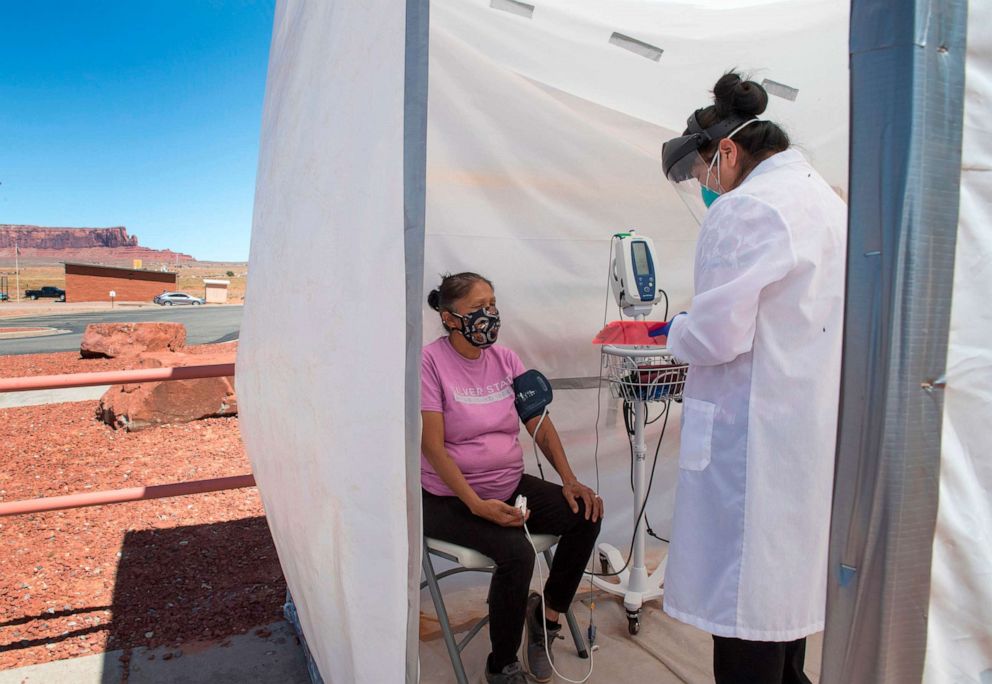
The Navajo Nation historically has had the odds stacked against them when it comes to healthcare and accessing it. With their economic status and lack of resources needed to survive, such as clean water, affordable food, and adequate housing, they have historically been hit the hardest by illnesses and viruses. But one of the most prominent factors for Indigenous nations like the Navajo, both in the United States, Canada, and many other countries across the globe, is that healthcare is not publicly accessible on many reserves and receives little to no proper funding from the government. This has been the case for many years, but it became broadcasted to the world on a larger scale during the ongoing Covid-19 pandemic- and for the Navajo Nation, inaccessible healthcare meant taking matters into their own hands. Many Navajo healthcare workers and frontline workers have been working diligently to get the eligible population vaccinated, and as of May 26th, 2021, seventy percent of the Navajo nation is fully vaccinated. However, this comes at their own expense, as their frontline workers and representatives have had to work hard to secure vaccines, community and crowdfund their Covid-19 relief efforts, and encourage other Navajo people to take the jab. This is because it was believed that many Indigenous people would be hesitant to receive the vaccine, especially after the many historical episodes of weaponized illnesses and government ignorance, the most infamous being the smallpox epidemic which was brought over to Indigenous lands by colonizers and resulted in a staggering 95% of the Indigenous population at the time being wiped out. Some non-Indigenous Canadians have been hesitant as well, but not for the same reasons- can you imagine your own anxiety surrounding a vaccine if you had faced the same historical illness-based genocide? The Indian Health Service and many other Indigenous health clinics and providers within the Navajo Nation have been long underfunded by the United States government, but nothing changed once Covid-19 hit. This forced medical facilities to reuse protective gear, like gloves, masks, and medical equipment, as well as delayed transfers to larger, state-funded hospitals as Navajo people were dying at such alarming rates, there was far less urgency in flying them to other locations to better treat them. However, the pain of suffering from the Big Cough, as many Navajo residents call it, and the pain of watching a loved one suffer from it, do not stop at Navajo and other Indigenous health clinics. This is because Indigenous people are not much safer in state-funded, non-Indigenous-run hospitals, and unfortunately, we have seen this time and time again when it comes to suspicious Indigenous deaths and medical malpractice. Two of the most infamous cases actually come out of Canada, involving the death of an Indigenous woman and the nonconsensual sterilization of Indigenous girls- as young as nine years old.


In The Spirit of Reconciliation and Respect- Canadian Connection

The untimely and suspicious death of Joyce Echaquan, of the Atikamekw nation in Quebec, was a case that shocked Canada and opened the eyes of non-Indigenous Canadians to the horrors that Indigenous people face within hospitals- what was once thought to be a matter of less urgency when providing services or casual racism (which is still not at all acceptable), now became a matter of life and death. After Joyce was hospitalized for stomach pains, she was mistreated by nurses and eventually died of heart failure- but not before live-streaming her death on Facebook, in which nurses insulted her, called her slurs and even told Joyce at one point that she was “stupid as hell.” All this happened even while Joyce was live streaming on top of her calling for help and screaming in distress and fear, which shows that non-Indigenous healthcare professionals and providers have been taught to not only enforce these racist views but also ignore them when it happens in their workplaces. However- death is not the only thing ignored by and even allowed to slide within hospitals, as the sterilization of Indigenous girls under the age of ten has now come to light amid the growing conversation around Indigenous people in Canada. It started with a tweet from a Metis lawyer and activist named Breen Ouellette, who discussed how within the last decade, social workers have been forcing Indigenous girls to have IUD- a form of birth control- inserted by doctors to prevent pregnancy as a result of sexual abuse in the foster care system, and to top it off, did not provide the proper follow-up care. While the investigation into this act of eugenics and genocidal behaviour is ongoing, this is not the first time non-Indigenous health facilities and practitioners in Canada have been accused of forced sterilization- as this has been an ongoing practice since the early times of colonization. The question that many non-Indigenous Canadians have, and one you may have as well, is what is the bigger meaning to all this? The acts of discrimination, racism, sterilization, ignorance, and even downright murder that happen to Indigenous communities and people across the world, and especially in the United States and Canada, come back to the lack of accountability the governments take, and how little they value and respect Indigenous lives. This is ironic because the governments, especially the Canadian government, claim that they stand with Indigenous residential school survivors, Indigenous families affected by the clean drinking water problem, Indigenous communities impacted by the Covid-19 pandemic, and so on- yet also refuse to address and more importantly, solve systemic issues such as medical discrimination, the weaponization of illnesses, forced sterilization, underfunded healthcare, sexual abuse in the foster care and judicial systems, and mental health crises on reserves and in Indigenous communities. The Canadian government refuses to listen to Indigenous people or support their communities but pretends like it is making leaps and bounds towards reconciliation and respect by doing the bare minimum- like accelerating vaccine doses for Indigenous people, creating a ‘land acknowledgement’ to play before the national anthem, or flying flags half-mast after the discovery of hundreds of buried bodies of the children who attended residential schools. For Indigenous people to be recognized and treated as equals in the eyes of the government, action must be taken and governments must be held accountable, especially by non-Indigenous Canadians- because if it doesn’t, we will only see these horrible acts like medical discrimination, eugenics, and genocide, become a bigger issue than we could have ever imagined.


The Future Genocide Of The Awa Nation In The Amazon- Mya

The Future Genocide Of The Awa Nation In The Amazon


Who are the Awa People? 

The Awa people are Indigenous peoples who live within the Amazon. They are a group of nomadic hunter-gatherers who live in the forested areas of northeastern Brazil. They are also skilled hunters, and while some have taken to using confiscated shotguns from illicit poachers, others still hunt with 6 foot (2 meter) longbows. Being Indigenous they also have an intimate relationship with and a deep understanding of the forest, animals are only eaten at certain times of the year to ensure the survival of the forest. They are self-sufficient people, and everything they need from baskets to bow and arrows comes from the forest and without the forest they are unable to do so. The Awa people are being threatened by illicit loggers and ranchers pose the biggest threat to the Awá, because they are cutting down and burning the land with which they coexist. Who is behind most of these illegal ranchers and loggers? Who is making it acceptable for this to happen? 


President Bolsanaro  

President Jair Bolsanaro is making it almost impossible for the Awa Nation to flourish on their land. It is no secret Bolsanaro is against anything to do with Indigenous people, environmental and social groups have referred to him as the Amazon’s worst enemy or the Trump of the Tropic. According to the New York Times, in the first six months of Bolsanaro’s term measures to protect the Amazon (fines, destroying logging equipment in protected areas) dropped by 20%. It is clear that he does not care for the Amazon nor for the people who live within. Bolsanaro is quoted saying in an interview “If it were up to me, Indigenous people would not even have a millimeter of land”. Do you think this man should be the president of Brazil?. Why is he able to impose a threat by threatening to take away the rest of their land? Have they not given us enough?. 


Deforestation

The Awa nation lives on lands which are rich in natural resources like gold, zinc, copper, silver, platinum and other minerals because of this they are subjected to threats. FARC, an arms group, has claimed the lives of 8 members of the Awa Nation and two bodies of 8 months long pregnant women. Government officials tried to remove local crops of Mafia members meanwhile the aftershock of the fumigation also destroyed Awa nation land as well as killing their animals and their women are more prone to miscarriages or premature births. An anonymous Awa Nation leader was quoted saying “We hate the fact that now our forests are being viewed by others as financial commodities. The notion that outsiders can place a price on our resources is ridiculous. Our forests and our lands mean so much more to us. Without them we are nothing. Outsiders simply don’t understand this”. In the past 50 years, 17% of the Amazon has been destroyed which is the tipping point of no return is 20-25%. If the Amazon hits the point of 20-25% it’s water cycle will no longer be able to support the ecosystem. Many developing countries get loans from more prosperous countries, like the United States of America, in order to function properly. Cutting down the Amazon’s trees allows these developing countries to repay their debts as deforestation is profitable.

Connection to Canadian Indigenous People 

Everyone knows that Indigenous people all over the world have been affected by colonization. In Canada we do not have uncontacted nations like the Awa NAtion in the Amazon but that does not mean there is still no connection between the two. For example, Indigenous people who hunt seals in the North West River. They are being affected by climate change as seal hunting has hit an all time low in 50 years as a result of ice conditions being iffy and it not worth risking their lives. The Awa Nation are facing climate change as well as loss of food due to deforestation. The Awa nation’s food supply has drastically dropped as a result of Amazon fires, deforestation and invasion of farmers and loggers. Their animals have no homes so they are unable to repopulate, their fruits and vegetables are being burned and this is leaving them helpless just like the Indigenous people in the North West River. These two nations may not face the exact same problems but again they are similar and out of their nations control. So you may ask, what can I do to help Indigenous people in Canada or even around the world? 

Inquiry questions:

How can we as young adults help protect the amazon and protect the Awa people from genocide? As this is hard for any young adult there are still smaller ways we can do to spread awareness. Some ideas could be posting issues on our social media, yes social media is an effective tool that sometimes gets messed around with but millions of young adults all over the world have it and this is effectful for our generation. Finally, we can donate. It does not need to be monthly nor does it have to be hundreds of dollars but any donations help. These donations will go towards putting laws into place to protect ancestral lands or even help land defenders with legal fees.

Why are the Awa Nation being targeted by brazillian president Jair Bolsonaro and his followers? Deforestation brings money into the pockets of farmers and members of the government. Farmers are following Bolsonaro’s lead by targeting the Awa Nation in order to clear them from their lands in order to create pastures for their animals as they want to eat the lush leaves and fruits of the rainforest. More land cleared out means more space for farmers. Deforestation also helps provide a source of income to repay debts, everyone needs lumber. We use it for things like paper or furniture. Every country needs lumber so if you have plenty why not share right? Wrong, this is a detrimental way of repaying your debts. 

How are the Awa Nation protecting the Amazon? Well many resources have been put into place in order to help the Awa Nation like different organizations but the nation themselves have created an army. They are called Land Defenders, they are a group of Awa people who defend their homes from illegal loggers. They don’t use guns or any present day protection, they use homemade tools like knives, bows and machetes. They stay up all hours of the night just protecting their lands. More often than not illegal loggers do not know the Land defenders are there until they strike, they are amazing at staying silent and hiding within the forest. This is a great honor within the community and they accept it with pride. 


Political Thinking Concepts: 

Political concept: There is so much evidence to back the claims that president Bolsonaro has no emotion towards Indigenous people. He has been quoted in an interview saying if he had the choice then Indigenous people wouldn’t even have a millimeter of land. He is not ashamed of his hate towards the Indigenous community and with this comes his followers. Just like Bolsonaro his followers disrespect Indigenous land and it’s people. Having such an influence on the country like Bolsonaro he has the ability to wave convictions for any illegal logging or any illegal thing done towards the Indigenous Community.  

Stability & change: I believe that there needs to be a change within the government of Brazil. They have a long history of corruption and with this corruption comes the mistreatment of minority groups as well as nature. Policies need to change meanwhile they have stayed the same throughout many presidents who have been proven to be corrupt. Corruption is the main idea why other countries have changed certain laws or indicted members of government. I believe that this corruption needs to change for the benefit of the world and the benefit of the Indigenous people.  

What can we do to help?

First of all we can always educate ourselves on the issues. Education is key to truly understand what is happening to these nations, how it is detrimental to their culture and their values. Secondly, if you are wanting to donate research the organization you are donating to so that the money is truly going towards these Indigenous nations. An organization that I personally like is called “Survival International. Org”. This organization gives you background information about who you are donating to, what their goals are as an organization, their campaigns, and they keep their website updated with current and relevant news and information. Lastly, if you are unable to donate just bring attention to these issues. Whether it’s making posters, making a post on social media or even just informing yourself and others.

Thursday, June 10, 2021

The Type 2 Diabetes and Obesity Epidemic with the American Samoan Peoples (Jan 2020)

Jan 2020

The Type 2 Diabetes and Obesity Epidemic with the American Samoan Peoples


Statistics

So what are the stats?


1 in 3 American Samoans suffer from diabetes


100 million people had diabetes in 1980 that number has quadrupled by 2014


In 2010 91% of women and 80% of men were obese


86% of American Samoan mothers were obese in early pregnancy, which raised the risk of obesity in their babies


1 in 4 people in Samoa have a variant gene also known as the thrifty gene


The thrifty gene is quite rare


The average Samoans weight has shot up well their health has decreased


Weight related issues have been rising on Samoan islands since the 1970’s


Obesity, diabetes, and heart disease kill many islanders at a young age


The thrifty gene is related to a 35% higher odds of being obese


Opinion on the stats


The Thrifty Gene

Information

What is the thrifty gene? Well the thrifty gene is a gene variant which is a mutation that promotes more efficient fat storage. This mutation is categorized as a missense mutation because, it causes a particular amino acid in a protein to be replaced with a different amino acid that reduces its intended function. This gene is also associated with a reduced risk of diabetes, which strengthens the ectopic fat in the body.


Background

The thrifty gene was helpful to the Samoan peoples during their long voyages. Pictured here is a picture of a group of Samoans in the 1940s. This shows the Samoans before the obesity epidemic occurred. The thrifty gene did not become a problem until the American Samoans settled down on their islands and stopped eating traditional foods and traditional ways.


Other Causes

Other causes for the obesity epidemic is western food. The reason for this is because we eat so much unhealthy, processed foods. The United States of America exports its diet to everyone in the world, making the world fat or obese. The traditional samoan diet is healthy and contains things such as coconut, bananas, seafood, and taro. After WW2 Americans were eating a lot of turkeys, and the turkey tails were not desired by the Americans and they gave them to Samoa when meat was scarce. Turkey tails are full of fat and oils which is why they were undesirable by Americans. At one point during this period the average Samoan was eating 44 pounds of turkey tails a year Now that is not healthy ad kind of sad by my standpoint. 93% of Samoans became overweight or obese due to this factor and the thrifty gene kicking into overdrive. The Samoan government banned turkey tails is 2007, but this was not a positive ending. This caused the WTO (World Trade Organization) to blocked Samoa’s membership till they agreed to eliminate the ban on turkey tails. Countries that were poor who made trade deals with the U.S.A. , ther diets fell apart. NAFTA (North American Free Trade Agreement) was the worst trade deal ever it has done the most to spread obesity than any other trade deal made.


Background Information


My opinion


Works cited

https://www.scienceofrunning.com/2010/10/genetics-of-obesity-thrifty-gene.html?v=3e8d115eb4b3

https://www.ncbi.nlm.nih.gov/pmc/articles/PMC5411261/

Patriot act


Tuesday, June 8, 2021

How Suicide Rates Affect Indigenous People in Australia (Jan 2020)


January 17, 2020
Indigenous Suicide in Australia
The world needs to know

How has Australia has treat their Indigenous people throughout history?

Starting back between the years of 1770-1900s the Indigenous people have been driven out from their lands and have been massacred on countless occasions but that’s just a very brief summary. Looking back in 1770 James cook sent on orders by the United Kingdom to speak with the first Australians to create a treaty and to obtain permission to explore their land. Instead James cook declared he was claiming the East coast for the United Nations and calling it New South Wales.  This claim was made without any consultation of the Indignous people of that land which is just ridiculous, how would you feel if someone just came into your home and said it was there's now and if you said no, there's a chance your life could be in danger. In 1789 the first British settlement was built and the Europeans brought the smallpox disease with them which struck the Indigenous people in Port Jackson first which then spread and killed over 50% of the Indigenous population. After Smallpox the Europeans brought more diseases such as Chickenpox, Influenza and Measles which targeted indigenous communities the hardest because of the large amount of people crowded in a small area. 

Another way the Indigenous people of Australia were mistreated was when the settlers took advantage of the fact that the Indigenous people and no conception of land ownership and could be easily driven off their land that they wanting for farming or gazing and they would be “happier” somewhere else.

When did Indigenous Australians start losing their culture?

Indigenous Australians had a very deep spiritual connection with their land and as a result of losing such land cultural and spiritual practises which were necessary to the bond and well-being of the groups could not be maintained and this was the beginning of the end to their traditional ways. It was also hard to maintain a culture when the European settlers keep slaughtering the Indigenous people throughout history, looking back in 1928 10000-20000 Indigenous Australians were reported dead because of their food and water being poisoned several times and this was just one way they were killed off. 

What does any of this have to do with suicide happening today in Australia?